Paracel promotes a space to raise awareness and drive natural risk prevention in the department of Concepción
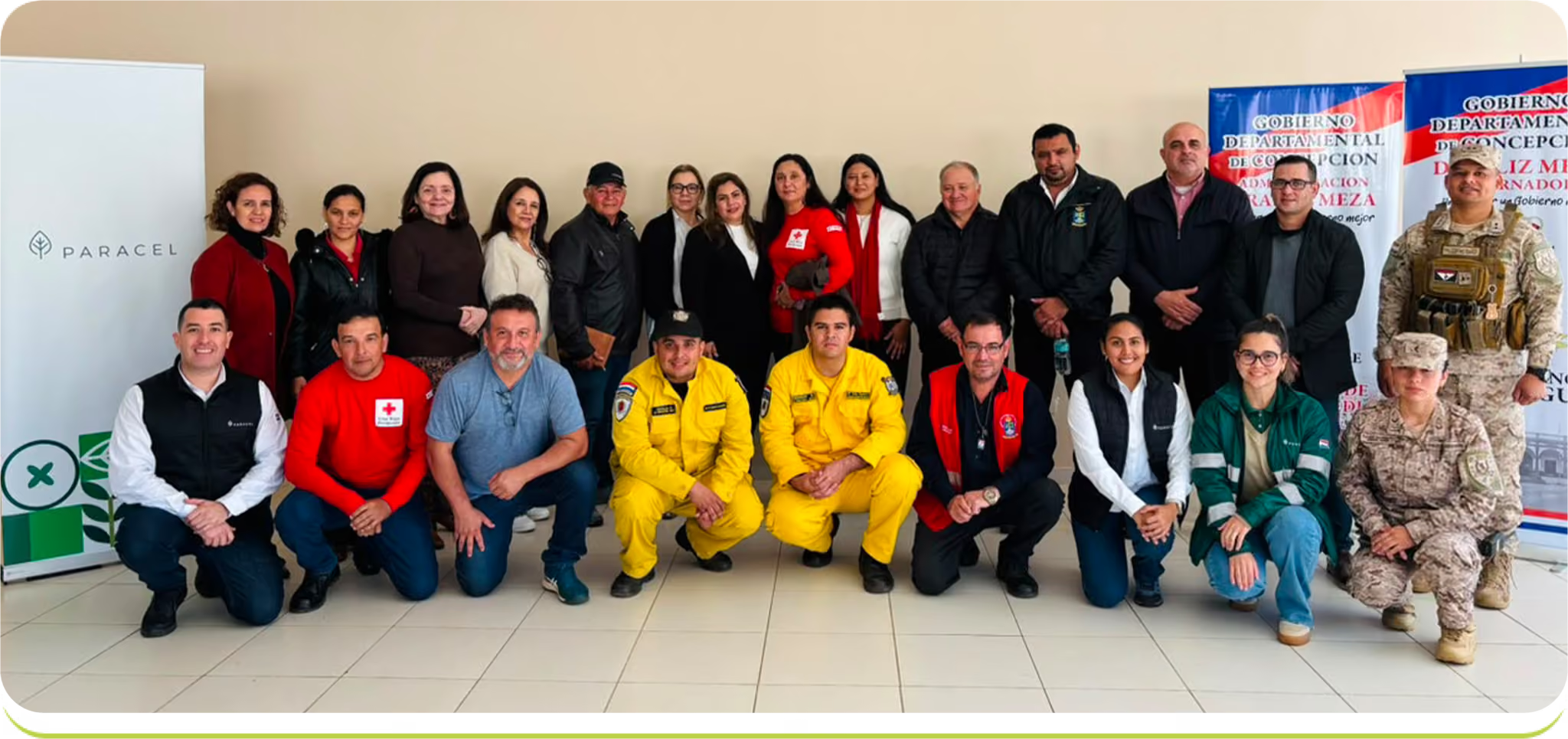
Paracel, with the support of the Concepción Departmental Government and in partnership with the ARAPY Climate Science Hub, held the SWOT Analysis Workshop for Risk Prevention in Concepción, an initiative aimed at the participatory development of a Risk Management Plan for the department of Concepción. The meeting also sought to raise awareness about the challenges associated with climate phenomena and the importance of promoting preventive actions.
The activity brought together representatives from public institutions, civil society organizations, and local leaders to broaden knowledge about the consequences of the ENSO phenomenon (El Niño and La Niña), as well as to identify social, economic, environmental, legal, and educational factors that must be considered for the prevention, monitoring, response, and recovery from natural events. Participants also worked together to identify opportunities, challenges, and actions that will contribute to the development of a future risk management plan for the department.
The workshop was facilitated by specialists from ARAPY: Antonieta Rojas de Arias, president of the ARAPY Climate Science Hub and specialist in public health and climate change; Larissa Rejalaga, specialist in integrated fire and forest fire management; Max Pasten, specialist in atmospheric sciences and climate variability; María del Carmen Álvarez Enciso, specialist in hydrology and water resources; and Rossana Scribano, specialist in climate change adaptation and risk management.
Through this initiative, Paracel promoted collaborative work among various local sectors to raise awareness about the risks associated with climate phenomena and contribute to the participatory development of a Risk Management Plan for the department of Concepción.
About the ARAPY Climate Science Hub
It is an association of academic researchers dedicated to research, development, and innovation regarding the challenges posed by variable climate and global change. It provides the necessary knowledge to shift from reaction to planning and preparation, the development of early warning systems and other climate services for climate risk management, as well as innovative technologies and management adjustments for adaptation, including nature-based solutions.